Key takeaways
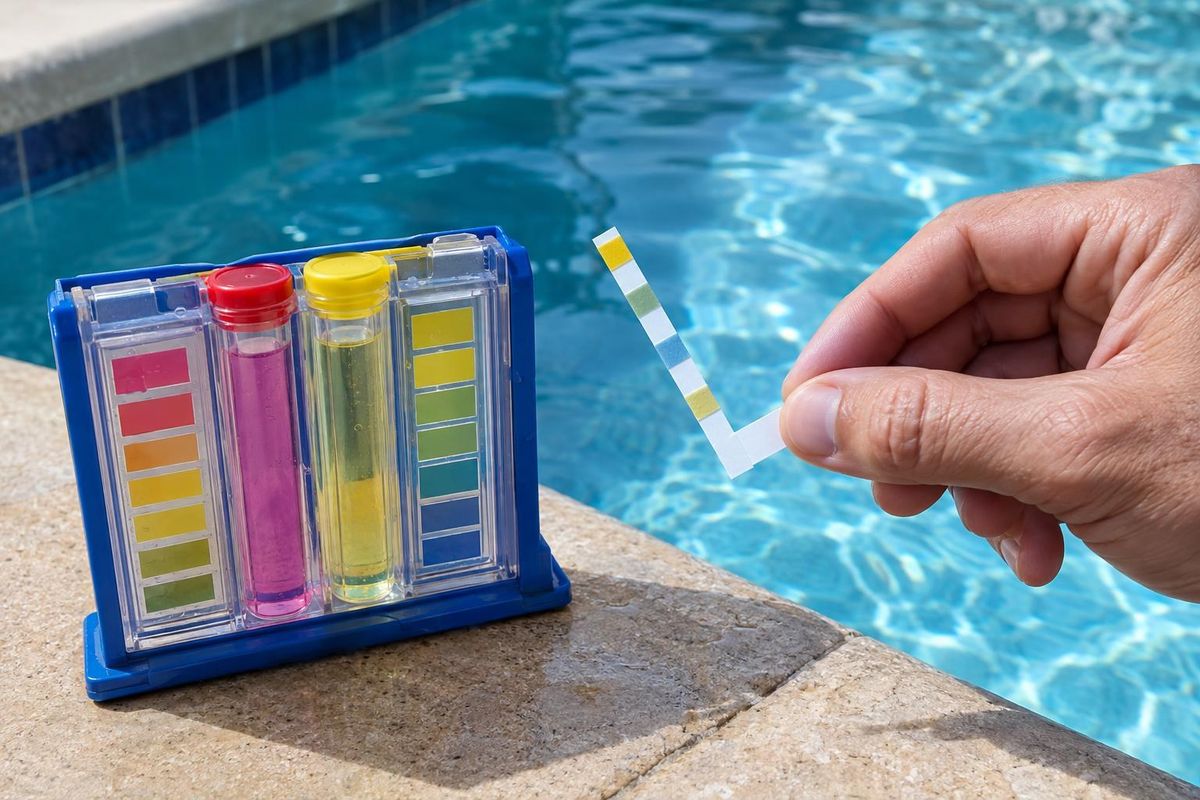
- Test the water weekly and adjust in the right order.
- Sanitizer, filtration and circulation work together to keep algae away.
- Green water means the sanitizer fell behind, and the fix is a process, not a single chemical.
- Balanced water protects swimmers, surfaces and equipment.
The numbers that matter
pH tells you how acidic or basic the water is, and it affects comfort, sanitizer strength and corrosion. Alkalinity buffers the pH so it does not swing. Sanitizer, usually chlorine, keeps germs and algae down, and stabilizer protects chlorine from the sun. Calcium hardness matters for plaster and for scaling.
Each number affects the others, which is why adjustments are made in a sensible order, starting with alkalinity and pH.
Why pools turn green
Algae blooms when sanitizer runs low, the pH drifts, the filter is dirty or the water does not circulate. Heat, rain, leaves and heavy use all push chlorine down. A pump that fails for a few days in July can turn a clear pool green.
Around Middle Tennessee, a hot summer week can do it, which is why steady care matters most from May through September.
How to clear green water
Test the water, clear the debris and clean the filter. Brush every surface, shock the pool with the right chlorine dose and run the pump continuously. Clean or backwash the filter again as it loads up with algae. Retest and rebalance until the water is clear.
It can take several days, and if the filter or pump is failing, that is fixed too.
Keeping it clear
Run the pump long enough, keep baskets empty, brush weekly, test often and shock after storms or heavy use. A cover and a cleaner reduce the work, and a service visit each week keeps small problems small.
The CDC and the Pool & Hot Tub Alliance both have good, plain advice on water care.
Official sites to explore
Brand names and logos belong to their owners. These links open the official websites in a new tab, and we are not affiliated with them.
- CDC Healthy SwimmingPublic health advice on safe, healthy swimming and pool water.
- Pool & Hot Tub AllianceIndustry association with standards and consumer information on pools and spas.
- Pool SafelyFederal guidance on pool and spa safety for families, including barriers and drain safety.
- University of Tennessee ExtensionResearch-based guidance on soils, water and home landscapes in Tennessee.
- U.S. EPA: WaterSenseTips for using water wisely at home, including pools.
Quick answers
How often should I test my pool?
Weekly in the swim season is a common routine, and more often after storms or heavy use.
Is green water dangerous?
Algae itself is mostly a nuisance, but it can mask other contamination and make surfaces slippery, so stay out until it is treated.
Why is my pool cloudy but not green?
Poor filtration, unbalanced water or low sanitizer are common reasons.